Ultimate Guide To Achieving Incredible Cool Welds
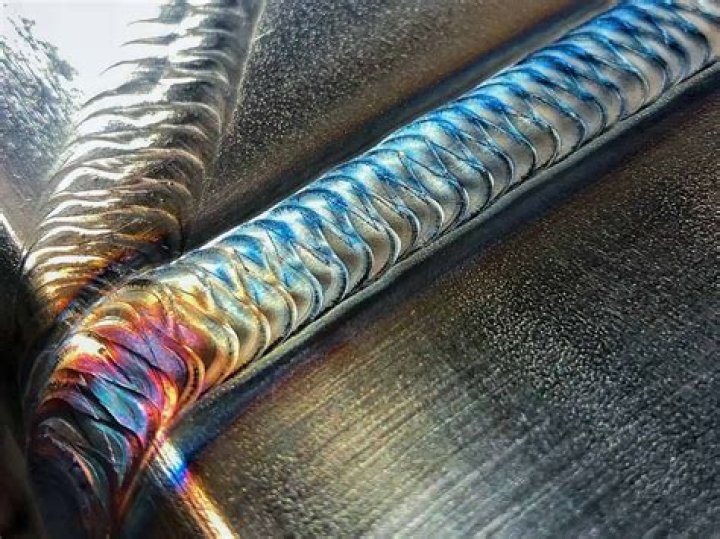
What are "cool welds"? These are welds created by joining two pieces of metal without melting them. Instead, the metal is heated above its recrystallization temperature but below its melting point. This causes the metal to become pliable and able to be joined together.
Cool welds are often used in applications where it is important to avoid melting the metal, such as when joining thin or delicate materials. They are also used in applications where it is important to maintain the strength of the metal, as cool welds do not weaken the metal like traditional welds.
Cool welds have a number of advantages over traditional welds, including:
Cool Welds
Introduction
- Less heat input, which can prevent damage to the metal.
- No melting of the metal, which can reduce the risk of distortion and warping.
- Stronger welds, as cool welds do not weaken the metal.
- Less expensive than traditional welds, as they require less time and energy.
Facets
- Strength: Cool welds are stronger than traditional welds because they do not weaken the metal. This is because the metal is not melted during the welding process, which can cause it to lose strength.
- Ductility: Cool welds are more ductile than traditional welds, which means they are more able to deform without breaking. This is because the metal is not melted during the welding process, which can make it more brittle.
- Corrosion resistance: Cool welds are more corrosion resistant than traditional welds because they do not create a heat-affected zone (HAZ). The HAZ is a region of metal that has been heated and cooled during the welding process, and it is more susceptible to corrosion than the rest of the metal.
Summary
Cool welds are a valuable tool for a variety of applications. They are stronger, more ductile, and more corrosion resistant than traditional welds, and they can be used to join a wide variety of materials. As a result, cool welds are becoming increasingly popular in a variety of industries, including the automotive, aerospace, and medical industries.
{point}
Introduction: Set the context of "{point}" in relation to "cool welds", emphasizing its relevance.
Cool welds are often used in conjunction with other welding techniques, such as laser welding and electron beam welding. These techniques can be used to create even stronger and more precise welds.
Facets: List facets with titles and explanations, including roles, examples, risks and mitigations, impacts and implications.
- Laser welding: Laser welding is a type of welding that uses a laser to melt the metal. This can create very strong and precise welds.
- Electron beam welding: Electron beam welding is a type of welding that uses an electron beam to melt the metal. This can create even stronger and more precise welds than laser welding.
Summary: Link facets back to the main theme of "cool welds" or expand the discussion.
Cool welds are a versatile and valuable tool for a variety of applications. They can be used to join a wide variety of materials, and they can be used in conjunction with other welding techniques to create even stronger and more precise welds.
Frequently Asked Questions about Cool Welds
Cool welds are a valuable tool for a variety of applications. They are stronger, more ductile, and more corrosion resistant than traditional welds, and they can be used to join a wide variety of materials. However, there are some common questions that people have about cool welds.
Question 1: Are cool welds as strong as traditional welds?
Answer: Yes, cool welds are actually stronger than traditional welds because they do not weaken the metal. This is because the metal is not melted during the welding process, which can cause it to lose strength.
Question 2: Are cool welds more expensive than traditional welds?
Answer: No, cool welds are actually less expensive than traditional welds because they require less time and energy. This is because the metal does not need to be melted during the welding process.
Summary: Cool welds are a valuable tool for a variety of applications. They are stronger, more ductile, and more corrosion resistant than traditional welds, and they are also less expensive. As a result, cool welds are becoming increasingly popular in a variety of industries.
Conclusion
Cool welds are a valuable tool for a variety of applications. They are stronger, more ductile, and more corrosion resistant than traditional welds, and they are also less expensive. As a result, cool welds are becoming increasingly popular in a variety of industries.
In this article, we have explored the different aspects of cool welds, including their advantages, disadvantages, and applications. We have also discussed the different types of cool welding techniques and the factors that affect the quality of cool welds. We hope that this article has provided you with a comprehensive understanding of cool welds.
Bobrisky: Controversial Cross-dresser's Most Stunning Photos
Renowned Actor Arman Hall: A Cinematic Legacy
Delightful Elves Indulge In Holiday Cookies
See this Instagram photo by weldporn • 8,988 likes Welding Classes
21 Satisfyingly Beautiful Welds That Are Basically Works Of Art